Friday, 18 January 2013

Stealing Africa's Heritage? The Global Trade in Agricultural Land


One of the great pleasures of running the Sustainable City Awards is judging the "Farsight" category for financial research.

The candidate papers are gleaned from the London Accord, which means they are always of high quality and cover a fascinating range of topics. This year was no exception.

The winner was a paper by CA Cheuvreux on the sustainability risks associated with luxury brands- human rights, conflict minerals, child labour, pollution, habitat destruction endangered species etc. It made for fascinating reading and demonstrated the soap bubble fragility of brand reputation.

However, I must confess the paper that got me thinking most was one from Deutsche Bank on the global trade in farmland

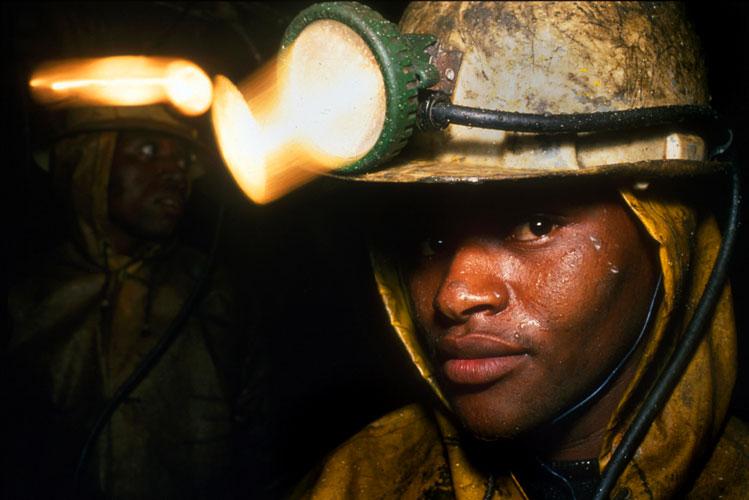
This is a brilliantly written and accessible report which discusses the global land rush that is taking place for agricultural land. Much of this trade is driven by sovereign wealth funds (though some hedge funds are investing too) and concerns significant purchases of land in some of the poorest parts of Africa.

The Deutsche Bank report contains some startling numbers- for example over the last 12 years some 83 million hectares of land in developing countries – that is 1.7% of the world's agricultural area has been bought by foreign investors- notably from China, Brasil and India and by state owned companies from the middle-east. 

Whilst it could be argued that foreign investment in African agriculture will bring much needed improvements in skills and infrastructure. This raises a number of troubling questions, especially when, according to Deutsche bank investment intended to enhance food exports are taking place in countries where malnutrition is common and there are issues with corruption and dysfunctional land registries.

This raises the very real prospect of destabilisation of the region driven by conflict arising from a failure of investors to respect the economic and social rights of local populations, to preserve environmental sustainability and to avoid one-sided agricultural development.  This is especially apposite given that research points to a global rising in food prices being the trigger of the Arab Spring.

When one considers that this report has been produced, not by an NGO or aid organisation, but by a major international banking corporation, it makes me wonder whether we are sleep walking into a crisis.


Thursday, 15 November 2012

Interesting Times

Living in Interesting Times


I organised a breakfast meeting last week for a group of leading environmentalists and financial services practitioners. The objective was use their input to shape the agenda for the Lord Mayor in 2013/14, who will make sustainability the core theme of the Mayoralty. 


The discussion was very lively and a couple of points that were raised really resonated. In particular the importance of cities as political and economic entities was highlighted, and it was suggested that this had increased in the wake of the economic crisis.

The pragmatic approach is for city governments to work directly with corporates to drive progress which circumvents blockages within national administrations.

This is the logical conclusion of the perceived abrogation of responsibility by national governments for leadership in the field of sustainability.

In the UK  despite the fact that a third of current economic growth is coming from the green sector (which employs 940,000 people), government support for this sector is patchy. By corporates have come to understand the risks and opportunities associated with resource scarcity and sustainable business practices, and are becoming frustrated by a lack of engagement by policy makers with these issues.


Personally, I found all this rather alarming as it does rather circumventing the democratic process! But on the upside the issue of climate change has not “gone away”, climate change adaptation-  coping with water stress, heatwaves and flooding is under the microscope following hurricane Sandy.

As (somewhat depressingly) the rest of world takes its cues from the US when it comes to environmental issues, I am hopeful that the damage done to American crops livestock and buildings by drought and hurricane will spur a re-engagement with the issue of climate change.

Ultimately money talks, and the green agenda is getting too expensive to ignore.


Friday, 19 October 2012

Attended the launch of National Ethical Investment Week at the House of Commons yesterday evening. A great evening catching up with a lot of old friends from the Socially Responsible Investment world, but what really struck me was the buzz that has been generated around the ethical and sustainable investment field of late.

I think there are a number of reasons for this, here are three of them-


Firstly, the low-carbon clean-tech field is the only sector of the UK economy that has seen significant growth of late- taken as a whole the CBI believe that over a third of the UK’s economic growth in 2011/12 is likely to have come from green business, (If you want to know more read "The Colour of Growth
" which the CBI brought out in July). The UK is going to need £1 trillion in investment to meet its 2030 Climate Change Bill agreements-  this means that an investment of £50bn every year. Fundamentally there's gold in them thar hills!

Secondly, with the retreat of the state, alternative methods of supplying public goods and services are being sought. Social Impact Investment and Social Enterprise Funding are beginning to attract serious attention. Plans are now well advanced to set up a Social Stock Exchange which will allow individuals and institutions to invest in social businesses from around the world.

Finally, bankers are people too! Being told constantly that you are an evil parasite who loves grinding the faces of the poor in the mud must sting, so I think there is a general desire to look beyond casino capitalism and reconnect with the fundamental purpose of financial services- providing the goods and services society wants.   


Monday, 24 September 2012

In just over a weeks time, the Sustainable City Awards will be open for business once again.

When I set these awards up back in 2000, I never thought that they would still be running over a decade later, yet the last few years, despite the economic downturn, have seen a near exponential increase in the number of firms applying.

I think that this is because during tough economic times, it's the organisations which focus on resource efficiency, supply chain value and innovation which best weather the storm.

Last year the awards (which cover 12 categories) had a big push on sustainable fish. This year we have joined forces with the British Fashion Council to create a new “Sustainable Fashion” Category.

In addition to attracting big high street names, awards will be made for best new designer, which will allow small brands their place on the catwalk.

Fashion and sustainability are a good mix as couture impacts on hearts and minds as well as the planet (for a fantastic example of fashion driving local sustainable economic growth look no further than the fabulous Thrifty Couture.).

Anyhow, in this years awards from fairtrade and organic to cutting edge fabrics and low carbon design, we are looking for designers and retailers who will be ambassadors for sustainability. I will let you know how we get on.


Some of last years winners
 

Tuesday, 24 July 2012

Low Carbon Economy In Action

I was at the launch of the London Clean Tech Cluster (LCC) which took place at the law firm Taylor Wessing last Wednesday evening.

I have been helping the LCC since Clive Hall, the founder came to see me in the spring of last year. Clive has been a whirlwind of energy and has pulled together a really impressive list of supporters. 
 

The aim of the LCC is to:
-          support cleantech businesses in the London region and attract new cleantech businesses to London
-         support exports and attract foreign investment into the cleantech space
-         encourage the uptake of cleantech across London and the Southeast.
There is quite a buzz around the eco-tech/clean-tech space at the moment, and I am hoping that this sector's continued growth will overcome some of the ridiculous prejudices held by the uniformed.
Labelling it as the "green economy" is unhelpful in the extreme- this allows the foolish to conjure up images of crystals and tepees. Whereas cleantech actually spans the industrial spectrum from catalytic chemistry, through advanced composites, past power systems to civil engineering. 
A rather dysfunctional view of business and industry is one of the prejudices that clouds rational discourse in this area, especially from those individuals who have a sub-conscious image of industry as being Victorian era dark satanic mills. 
Clean-tech with its SME base located in light industrial units and on university campuses does not accord with this image, which may explain serial policy failures to engage with the sector over the last 10 years.
However, you can't argue with the power of the market (although my previous post does mention policy risk holding back investment). The bottom line is that in an increasingly urbanised world, a world that will soon contain 9 billion people, demand for efficient and effective solutions to the problems of energy supply, clean water and air pollution is only going to increase.
The City of London is very interested in the market opportunities this presents- Venture Capital, investment, insurance and of course legal services- particularly around Intellectual Property Rights.
The UK has a choice- it can either throw its weight behind the domestic companies who are developing this technology and reap the rewards of enhanced exports, or it can let them wither on the vine and be forced to buy in expensive solutions ten years down the line.
I am a natural optimist, but given our past track record (jet engines, radar, television, lean burn engines, the computer boom of the nineteen eighties) sometimes even I struggle to see the light at the end of the tunnel. 
Anyhow, through partnerships with the LCC, Imperial Colleges' wonderful KIC and joint programmes with the Aldersgate Group and the London Accord, the City of London Corporation intends to keep the eco-tech flame alive in the City of London.
I will let you know how things progress.

Thursday, 12 July 2012

The Rise of Corporate Leadership

I suppose that now the dust has settled I should say a few words about Rio plus 20, which has been universally slated as a failure.

I did not go to Rio- in these straightened times, I did not think I could justify the expenditure. However, I did go to the Johannesburg Earth Summit back in 2002 as I had put together the UK Government submission on Financial Services.

Ten years ago, in Johannesburg I was struck by the lack of ambition of the official delegates- it was almost as though world leaders had been carried away with enthusiasm at the original earth summit, and their successors (and the army of minders accompanying them) were determined to avoid making even the slightest concession which would commit them to action of any kind.


 It was a bizarre bunker mentality- reminiscent of a spinster at the County Fair who is so determined not to be swindled by hucksters, that she sits in the refreshment tent nursing a cold cup of tea and completely missing out on the sunshine and fun. 

What struck me was how completely at odds this was with the drive and enthusiasm of the attendant circus of NGOs and Corporates, who clashed and cooperated on a massive range of initiatives designed to keep the flame of sustainability alive.

One particular exchange really stuck in my mind. It was a side event on corporate social responsibility in the minerals extraction sector. The CEO of a major mining firm with interests in West Africa, had stood up to make a speech, when he was interrupted by a group of protesters, decrying his company's record (if memory serves me, they wanted to give him an award for "greenwash").  However, they in turn were interrupted by an immensely dignified African who in a mesmerising baritone, quietly stated-


"It was not a company who jailed me for eight years for daring to organise a union. It was not a company who arrested and beat my colleagues when they questioned why the millions of dollars flowing into my country from mining were not being spent on schools and hospitals. It was a government." (Check out African Arguments for a fascinating insight into these issues)
 

 Now, I am not for a minute going to claim that companies are not culpable- through inaction and through collusion- for corruption, environmental destruction and abuse of human rights. However, I do believe that these issues are firmly on board room agendas.

Why? Well the driver is altruistic self-interest- these issues affect bottom line performance, and scandals concerning human rights, corruption or pollution show up clearly on balance sheets. 

Many of the more forward sighted corporates are now using sustainability as a management tool, horizon scanning to identify threats to profitability from resource shortages, or opportunities for new products or services to meet demands arising from global challenges.

The financial research on the London Accord website nails the economic drivers- not all corporates have woken up to sustainability yet- but those that have are significantly out-performing their rivals.

Which brings me back to Rio+20- governments may have abrogated their responsibilities and stepped back from leadership on sustainable development, but corporates are stepping up to the batting plate-  The Corporate Sustainability Reporting Coalition and the Principles for Sustainable Insurance are a case in point.

The latter of these initiatives presents a particular irony- it is entirely industry driven, and it aims to ensure that investors can price sustainability risk accurately when assessing the value of equities. Where is the government led initiative calling for agreed reporting standards for nations so that sustainability risk can be priced into sovereign debt?

I am not naive, I am aware that there are ample examples of appalling corporate behaviour, and there is a long way to go before Corporate sustainability is the rule, rather than the exception. However, I firmly believe that attitudes are changing- the agro-commodity sector is viewing water shortages and land degradation with alarm, the manufacturing sector is accutely aware of resource depletion, climate change and rising energy prices, and the financial services sector is begining to price climate risk.

Furthermore, the conversations I have with Corporates reveal increasing disquite with the failure of policy makers to develop clear and stable policy within these fields.

What I hear is a repeated mantra- "We can take account of environmental and social risks, we can factor legislation and regulation into our business models- but policy risk is pure poison- how can you commit millions of dollars of investment, when a programme can be killed with one speech by a politician pandering to a partisan audience?
  

Tuesday, 26 June 2012

The MEMO Project

As promised I want to tell you about my evening at Adjaye Associates which is related to the fabulous MEMO Project.

I first came across MEMO when I met Sebastian Brooke late last year.

Sebastian is the driving force behind MEMO, a monument to biodiversity which is being planned at Portland in Dorset. MEMO is fantastic- a one hundred and twenty metre high open structure, coiled like a titanic ammonite eroded from the Jurassic coast.

Visitors will be able to climb the monument using the spiral ramp, whilst admiring the thousands of carvings of plants and animals, designed by school children from across the UK.

This is a scale replica of the Hooke Bell
 At the heart of the monument will be the Hooke Bell a massive bronze bell (planned to be the largest in Europe), cast from bronze using a portland stone mold. The bell will be like the Lutine Bell in Lloyds of London and will be struck on Earth Day to celebrate biodiversity and commemorate species which have become extinct.  

Planning for the £20 million pound project is well underway. Dorset County Council have granted planning permission, and Adjaye Associates have drawn up detailed plans for the monument and the visitors centre, which will bring much needed economic development to this part of Dorset.

So what was I doing at Adjaye Associates? Well the City of London has a strong connection to Portland as many of the buildings in the City of London are built with Portland Stone. We also have a strong connection to biodiversity- not only do we manage a third of London's best loved open spaces, but Robert Hooke, the father of biodiversity was City Surveyor from 1666 to 1674 and oversaw the re-building of the City following the Great Fire in 1666.

Sebastian contacted me to see if I could help him spread the word on MEMO project in order to get support and sponsorship. I have been putting him in touch with various people in the City.

The event at Adjaye Associates was an opportunity to meet some of the other project supporters and hear about the latest developments. I was tremedously impressed by the callibre of people who were there Sir Tim Smit (who created the Eden Project),  Sir Ghillean Prance (former director of Kew) and a brace of other well know faces from the worlds of politics and the environment. The Duke of Edinburgh has also made a personal commitment to the project and will be hosting a fund raising dinner at Buckingham Palace.

I will let you know how the project develops.