Monday, 7 October 2013


In the wake of the release of the IPPC AR5 Report there has been a great deal of speculation regarding the UK Government's position on the issue of climate change. Senior politicians have comments that whilst they recognize the seriousness of the threat, they are uncomfortable with the idea of the UK leading international efforts to reduce carbon emissions as this may damage UK competitiveness.  
There has even been talk that the national carbon budget, enshrined in the Climate Change Act, may be reviewed. 
This, in my opinion, would be a mistake-
The price of a barrel of crude in 2003 was around $25
The price of a barrel of crude today is over $110
Source; http://www.ioga.com/Special/crudeoil_Hist.htm

In 1956 M. King Hubbert, a geologist for Shell Oil, predicted the peaking of US Oil production would occur in the late 1960s. He was correct
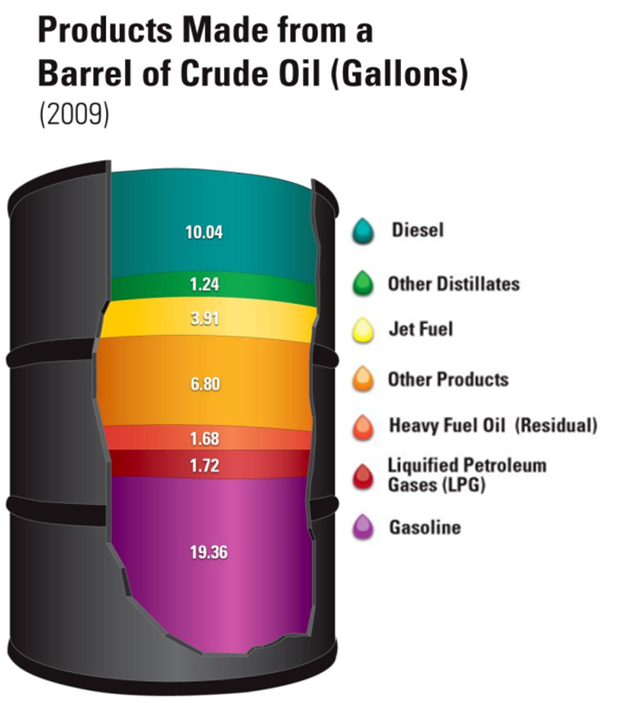
Today we consume around 4 times as much oil as we discover, and this disparity is accelerating, fueled by demand from developing economies. 
This is why it has become economic to extract from expensive unconventional sources- such as tar sand and fracking.
Leaving aside the fact of climate change, the cost of oil will only increase,. 
The Carbon budget is not there to serve as a sop to the greens. It is there because there is an urgent need to "decarbonise" our economy, and in an uncertain world, the national carbon budget, enshrined in law, provides a pole star for investors who are contemplating financing long term infrastructure. 
If we can enhance the efficiency of economic production through energy efficiency and diversification of our generation portfolio- i.e. a mix of nuclear, renewables and gas, we can develop competative advantage for home grown industry.

However this investment will only come if there is certainty on our direction of travel.
Quite simply, regardless of climate change, altering the carbon budget, which is intended to gently push the UK down the low carbon path is bad economics which puts short term issues ahead of the national interest.

Tuesday, 17 September 2013


The 2013-14 Sustainable City Awards launched at the beginning of September and this year the core theme is Entrepreneurship.

Over the 13 years I have been running the awards, I have been privileged to see  some wonderful examples of businesses and social entrepreneurs seizing opportunities to increase the sustainability of their enterprises.

The UK is looking for innovative and determined individuals who can create long term value which will benefit society, the economy and the environment. 

In 2014 the Mayor of London's key theme will be sustainability, prompted by the challenges that cities will face in accommodating rapidly increasing populations. By 2050 according, to UN estimates, 70% of the world’s nine billion people will live in cities. They will need housing, energy, sanitation, food, transportation and employment, and all of these will have to be supplied in a resource depleted, warming world. 

We need entrepreneurs who can deliver solutions to the problems cities face, not only to ensure that our cities remain great places to live work and do business, but to ensure that the UK gains a slice of what will become the growth market of the twenty first century.

Here are some of previous winners, who have inspired me.

Green Tomato Cars 

Green Tomato Cars were the Overall Winner at the Sustainable City Awards 2009/10 and were also Highly Commended in the Sustainable Transport category and the Tackling Climate Change category.
Green Tomato Cars was launched in 2006 with the ambition of changing the perception of ‘green’ businesses. By using exclusively low emission vehicles and offsetting its carbon dioxide emissions, Green Tomato Cars has become the most environmentally friendly taxi company in the UK. In order to stay ahead of the game and to improve its environmental performance, the company has trialed a host of innovations including advanced computer software, smartphone applications and shared rides. With a fleet of vehicles, transporting tens of thousands of passengers a month, for a small business they have made a real impact. Green Tomato Cars are an inspiration for other private hire firms to follow.

An image of GnewtCargo and one of their cargo vehicles

GnewtCargo

GnewtCargo was the Winner of the Sustainable Travel and Transport category in  2010/11.
GnewtCargo specialises in urban ‘last-mile’ delivery of goods for third parties in London, operating from ‘micro consolidation centres’ that increase efficiency within the City. It used an all-electric fleet of cargocycles and minivans, offering significant cost savings on deliveries due to electric vehicles being exempt from congestion charging and immune to rises in fuel prices. The combination of the traffic beating cargocycles and the capacity of minivans has enabled Gnewt to shape its service to suit their clients.
This method of operating results in significant air quality benefits through the reduction in carbon emissions and congestion in Central London. Gnewt creates fulfilling jobs within the local community, and where possible, they try to employ the long-term unemployed. GnewtCargo demonstrates impressive innovation in facing the challenges of a densely populated capital city, but more importantly have provided huge environmental and social benefits for the residents and workers in London.
Thrifty Couture logo

​Thrifty Couture

Thrifty Couture was the Overall Winner in 2012/13 and the Winner of the Greening the Third Sector category.
Thrifty Couture takes unloved clothes and creates covetable and affordable fashion. Sustainability is integral to the project. Its main aim is to create a sustainable business, commercially as well as environmentally, by training and employing the young unemployed and retired residents in fashion. It is run by the young, the old and the very old and provides apprenticeship training for unemployed 16 to 24 year olds from Inner London as well as refreshing the skills of retired residents. Exchanging knowledge and skills through outreach programmes and workshops supports inter-generational and intercultural relationships. Both the community and the environment are currently reaping the benefits of this project with a unique combination of entrepreneurship and innovation.​
An image of GetMoreBikes at work

​Get More Bikes

GetMoreBikes were shortlisted for the 2012/13 Tackling Climate Change and Air Quality categories.
GetMoreBikes was launched in 2012 to offer a full bike repair and maintenance service for riders, employers and fleet owners across London. The number of journeys undertaken in London daily between zones 1 and 2 alone is 500,000 and growing. The number of professionally qualified mechanics cannot meet this demand and the rate of training mechanics is not keeping up with the increase in bike use. GetMoreBikes addresses this problem. It aims to create sustainable businesses in cycle building, maintenance, repair and refurbishment in London. It aims to train unemployed 16 to 30 year-old residents to professional qualification level, and to support them in creating their own sustainable business. It aims to contribute to reducing carbon emissions in central London, and generate better health for Londoners. GetMoreBikes has recently teamed up with ATG Training, the country’s leading provider of Cycle Mechanics training and qualifications.

If you are, or know of an individual or organisation who may be a contender, do please check our www.cityoflondon.gov.uk/sca for details on how to apply. 

Tuesday, 23 July 2013

It has been a very busy month, so I have several things to tell you about before I am off on leave. Camping in the Lake District, since you ask, and I have timed it just as the heatwave is ending so it will be raining horizontally.  No doubt the experience will be intents.

Firstly, tremendously exciting news, I can finally break cover with the news that next year's Lord Mayor, who will take office in November will make sustainability the core theme of their Mayoralty. You may recall I was dropping hints about this back in February.


Image source: Factory 15

As I intimated then, the driver is global mega-trends- by 2050 70% of the worlds 10 billion people will be living in cities. Developing the infrastructure to support them, in a warming, resource constrained world will a major challenge.

However, where there is a challenge there is also an opportunity and London has a unique offering -


  • We have world class consulting engineering and architecture firms, to help decision makers design the cities of tomorrow.
  • We have the financial services organisations who can help them pay for them
  • We have the legal firms who can help them design the contracts to get them built
  • We have the insurance that can ensure that these future cities are resilient.
Selling these services to the world, particularly the rapidly expanding cities of India and China will be a major market for the 21st century- perhaps one that can revive the UK's economic fortunes.

This is why, next years Lord Mayor is embarking on an major programme which will seek to promote this aspect of London's services.  

Core to this is the development of a new strand of the London Accord/Long Finance project- Financing Tomorrows City . Follow the link to view the latest research.

I am delighted to announce that following discussion,  Acclimatise, who are long time contributors to the London Accord, will be posting the adaptation strategies of a number of other world Cities on the website- this will be the first time that all of these adaptation strategies have been gathered in one place.  

For the next 18 months I will be talking to organisations and institutions across London- from the Royal Society and Imperial College to the Future Cities Catapult and the World Cities Network to pull together a programme of activities to support the Mayoralty.

I will let you know how I get on.

Tuesday, 18 June 2013

I chaired the partners meeting for the Sustainable City Awards on Friday. This year the key theme of the awards is going to be entrepreneurship, and I am re-purposing the SME category to deliver this. The new category will be split in two in order to recognise both social entrepreneurs and business entrepreneurs.

What I am looking for is individuals and companies who have identified a gap in the market, or an opportunity for an new service which either takes advantage of sustsiability principles or deliver sustainable outcomes.
I know there are some cracking examples out there-

For straight commercial nous it is hard to beat Green Tomato Cars, which was launched as London's first green private car hire service in March 2006 by
TomPakenham and Jonny Goldstone. Starting with only 4 cars from a small riverside office in west London, greentomatocars became the fastest growing company in the history of London's minicab industry.

The company positioned itself to take advantage of two sustainability issues- a rise in interest by corporates in reducing their carbon footprints and secondly a loophole in London's conjestion charge which exempted low emission vehicles. Buoyed by massive demand and reduced costs the company took off like a rocket- at one stage Green Tomato Cars were the largest importer of Toyota Priuses in Europe.

If you are looking for a serial social entrepreneur Judith Paris cetrainly fits the bill- I am particularly fond of Thrifty Couture who take unloved clothes, and, with good design and workmanship, they create covetable and affordable fashion. Working with the unemployed, retired residents and ex-offenders, Thrifty Couture, offers employment and inspiration which upcycles garments, weaning people off Fast Fashion towards Slow Couture, and creating a sustainable business from a commercial as well as environmental perspectives.

Wednesday, 5 June 2013

Environmental Audit Select Committee

I helped the Environmental Audit Select Committee hold a seminar on green finance at the Guildhall this morning.

The meeting marked the launch of a new enquiry into "green finance" and the low carbon economy, which will be lanching in the autumn. 
A great line up of speakers was on show - amongst them Shaun Kingsbury, CEO of the Green Investment Bank

There was pretty comprehensive agreement amongst the speakers that long tem policy stability was the key to driving investment, as well as some innovative ideas on how to provide this- such as index linked carbon bonds

Chills were provided by Mark Campanale's brief tour of the truly scary horror show that is the Carbon Tracker Initiative - Caroline Flint's question about the impact of Carbon Capture and Storage on the concept of unburnable carbon only served to prove that the light at the end of the tunnel was an on-coming train.   

All of which served to frame the timely development of the Financing Tomorrow's City programme which went live yesterday. Do visit the site if you are interested in the furture of urban infrastructure investment.

Wednesday, 27 March 2013

Resources for Climate Change

At the recent Sustainable City Awards I refered to climate change as the topic that dare not speak its name.

The unfortunate fact is, the issue has been turned into a politcal football by swivel eyed libertarians on one side and soap-dodging lentil-munchers on the other. 
Any attempt at rational discourse is drowned out by trolling rent-a-post bloggists for whom the truth is a non-renewable resource.

Needless to say this is extremely unfortuanate at a time when resilience is becoming an increasingly important issue for cities.

I get to talk to senior people in the emergency planning and utility supply field. It is not common knowledge, but London was only a gnats whisker away from drought related disaster last year. In case you think I am talking this up, being a City boy my definition of disaster is not having your hebaceous borders die, it is having the supply to the water-cooled blade servers which run trading floors in the City interrupted.   

The hard of thinking, will blame all our problems on an antiquated distribution network, and that is certainly a contributing factor. But unlike electricity, you can't just generate more water- if it doesn't rain you are stuffed regardless of how shiny your pipes are.


Thinking about these issues and developing appropriate infrastructure investment responses is crucial if London is to remain competitive. Muddying the waters by obfuscation on whether climate change is happening (it is) or whether cosmic rays are to blame (they are not) is not helpful, but the forces of ignorance are fighting an increasingly political campaign which may affect the way in which long term infrastructure decision are made.

I can hold my head up and say that the City of London recognised the risks associated with a changing climate quite a while ago- which is why I was lucky enough to put together the world's first climate change adaptation strategy back in 2006. Communicating the risk clearly is the key so for those who like their data in graphical form I can heartily recommend this infographic http://www.learnstuff.com/climate-change/

If you like your facts as articles and discussions then http://www.skepticalscience.com/ is the place for you!

Tuesday, 26 March 2013

Celebrating Success

19 March marked the Awards Ceremony for the Sustainable City Awards and representative of over 250 organisations attended Mansion House to see this years winner recieve their gongs from ethical consumer champion Liva Firth (who was delightful to work with).

A video of the event can be found here

Despite the economic downturn there were some really inspirational entries this year and I believe that this is representative of a fundamental truth- during tough economic times, it is the organisations which focus on resource efficiency, supply chain value and innovation which will best weather the storm.

Friday, 8 February 2013

Sustainable Cities

Nobody knows exactly when the City of London was first founded; though Godfrey of Monmouth made a fanciful stab in the middle ages-


I

n the year 1108 bc Brute, lineally descended from the demi-god Encas, the sonne of Venus, daughter of Jupiter, builded this city upon the river now called Thames, and named it New Troy”.


More reliably, we know that following the destruction of Londinium by Queen Boadicea in AD 61, the Roman Town Planning Department set about rebuilding the City on a comprehensive scale, including public buildings, customs houses and an advanced water supply. Archaeological evidence on display at the museum of London suggests that then, as now, the City was founded on trade.

Following a brief dip in London’s fortunes in the dark ages, the City’s prime location and first class communications began to tell, London began its inexorable rise to prominence as a global trading powerhouse, and for the last eight hundred years, the Guildhall and the Corporation of London have been protecting the City’s interests.

Sustainable development and environmental protection have only really entered common parlance in the last few years, but the issues associated with them have placed limits on the growth of the City since its foundation.

The Corporation has long been aware that a clean environment, quality of life and economic prosperity go hand in hand. the problems facing Mayor and alderman in medieval times have a peculiar resonance today- water supply, adulteration of food, building regulations, refuse removal and the suppression of nuisance including smoke and noise.
In the past these issues only constrained the City for as long as it took for technical solutions to be thought up to solve them. This is what led to the great municipal revolutions of the last century when London became the world’s first Megacity thanks to its development of an effective sewage system, a clean water supply, street lighting and underground railways. Others soon copied London’s example.

Megacities continued to grow fuelled by their ability to exploit what was seen as the boundless wealth of the Earth’s natural resources;

·        Problems of waste were dealt with by exporting it to other locations to be put in holes in the ground;

·        Problems of pollution were dealt with by building ever higher chimneys;

·        and problems of supply were dealt with by importing food and raw materials from further and further afield.

However, we are now entering a new era when cities such as London are once again facing challenges and unlike the problems faced by cities in the past, these impracticalities are complex, interdependent and far reaching in time and space;
/

How do we plan Cities for a planet which will contain 10 Billion people? How will these people be fed, receive water and energy, be transported and have their waste disposed of?


Meeting these challenges will not be an easy task as unlike the problems faced by the engineering geniuses of the 19th Century, the solutions will require dealing with the terrible synergy between consumption and waste, convenience and consequence.

What is required is little less than a revolution in the way that cities are planned and run and core to this must be a new contract between the communities who make up cities (individuals, businesses, voluntary groups and the public sector) and the democratic bodies who serve them. This contract must balance the rights and responsibilities of those communities- The right to a clean environment, a sound economy and a good quality of life, balanced by; the responsibility to take ownership of their actions and the consequences of those actions.

To some extent this revolution is beginning to take place, the retreat of the public sector combined with globalisation means that increasingly it is cities rather than nations which are competing directly against each other.

This is leading to a fundamental re-assessment of the importance of quality of life factors in determining competitive advantage, and searching questions are being asked about how services and infrastructure can be planned for funded and delivered over the long term.
Our new clarion call for the 21st century is sustainability, and it will take just as much effort and cunning as that shown by our Victorian forebears if we are to succeed.

Friday, 1 February 2013

Quality of life, the new global battlefield

I attended the launch of London's Quality of Life Indicators 2012 report on Wednesday evening.

The report itself makes for very interesting reading. However, what I found even more interesting than the content was the context in which the report was set.

The event was intensely politicised and the presentations were very on message with respect to London's performance. I don't propose to comment on the basket of indicators chosen or the methodology used in displaying them- read the report for yourself.

Matthew Pencharz, the Mayors Environmental and Political adviser was on hand to set the scene and his fundamental message was simple- In a globalised world, London has to compete directly with other cities in order to attract investment and talent, Quality of life is one of the fundamental weapons in its armoury.

This ties in neatly with a major research initiative the City has planned for a little later this year.

The concept is fairly simple-

In 2050 the planet will have around 10 billion people living on it. The majority of those people will live in cities.   

Those people will need feeding, housing and transportation. They will require water to drink, their waste will need to be disposed of and they will need energy. 
How are these challenges going to be met, and with the retrenchment of the public sector where is investment in this infrastructure going to come from?

I will let you know more about how we intend to answer these questions in due course.


Friday, 18 January 2013

Stealing Africa's Heritage? The Global Trade in Agricultural Land


One of the great pleasures of running the Sustainable City Awards is judging the "Farsight" category for financial research.

The candidate papers are gleaned from the London Accord, which means they are always of high quality and cover a fascinating range of topics. This year was no exception.

The winner was a paper by CA Cheuvreux on the sustainability risks associated with luxury brands- human rights, conflict minerals, child labour, pollution, habitat destruction endangered species etc. It made for fascinating reading and demonstrated the soap bubble fragility of brand reputation.

However, I must confess the paper that got me thinking most was one from Deutsche Bank on the global trade in farmland

This is a brilliantly written and accessible report which discusses the global land rush that is taking place for agricultural land. Much of this trade is driven by sovereign wealth funds (though some hedge funds are investing too) and concerns significant purchases of land in some of the poorest parts of Africa.

The Deutsche Bank report contains some startling numbers- for example over the last 12 years some 83 million hectares of land in developing countries – that is 1.7% of the world's agricultural area has been bought by foreign investors- notably from China, Brasil and India and by state owned companies from the middle-east. 

Whilst it could be argued that foreign investment in African agriculture will bring much needed improvements in skills and infrastructure. This raises a number of troubling questions, especially when, according to Deutsche bank investment intended to enhance food exports are taking place in countries where malnutrition is common and there are issues with corruption and dysfunctional land registries.

This raises the very real prospect of destabilisation of the region driven by conflict arising from a failure of investors to respect the economic and social rights of local populations, to preserve environmental sustainability and to avoid one-sided agricultural development.  This is especially apposite given that research points to a global rising in food prices being the trigger of the Arab Spring.

When one considers that this report has been produced, not by an NGO or aid organisation, but by a major international banking corporation, it makes me wonder whether we are sleep walking into a crisis.


Thursday, 15 November 2012

Interesting Times

Living in Interesting Times


I organised a breakfast meeting last week for a group of leading environmentalists and financial services practitioners. The objective was use their input to shape the agenda for the Lord Mayor in 2013/14, who will make sustainability the core theme of the Mayoralty. 


The discussion was very lively and a couple of points that were raised really resonated. In particular the importance of cities as political and economic entities was highlighted, and it was suggested that this had increased in the wake of the economic crisis.

The pragmatic approach is for city governments to work directly with corporates to drive progress which circumvents blockages within national administrations.

This is the logical conclusion of the perceived abrogation of responsibility by national governments for leadership in the field of sustainability.

In the UK  despite the fact that a third of current economic growth is coming from the green sector (which employs 940,000 people), government support for this sector is patchy. By corporates have come to understand the risks and opportunities associated with resource scarcity and sustainable business practices, and are becoming frustrated by a lack of engagement by policy makers with these issues.


Personally, I found all this rather alarming as it does rather circumventing the democratic process! But on the upside the issue of climate change has not “gone away”, climate change adaptation-  coping with water stress, heatwaves and flooding is under the microscope following hurricane Sandy.

As (somewhat depressingly) the rest of world takes its cues from the US when it comes to environmental issues, I am hopeful that the damage done to American crops livestock and buildings by drought and hurricane will spur a re-engagement with the issue of climate change.

Ultimately money talks, and the green agenda is getting too expensive to ignore.


Friday, 19 October 2012

Attended the launch of National Ethical Investment Week at the House of Commons yesterday evening. A great evening catching up with a lot of old friends from the Socially Responsible Investment world, but what really struck me was the buzz that has been generated around the ethical and sustainable investment field of late.

I think there are a number of reasons for this, here are three of them-


Firstly, the low-carbon clean-tech field is the only sector of the UK economy that has seen significant growth of late- taken as a whole the CBI believe that over a third of the UK’s economic growth in 2011/12 is likely to have come from green business, (If you want to know more read "The Colour of Growth
" which the CBI brought out in July). The UK is going to need £1 trillion in investment to meet its 2030 Climate Change Bill agreements-  this means that an investment of £50bn every year. Fundamentally there's gold in them thar hills!

Secondly, with the retreat of the state, alternative methods of supplying public goods and services are being sought. Social Impact Investment and Social Enterprise Funding are beginning to attract serious attention. Plans are now well advanced to set up a Social Stock Exchange which will allow individuals and institutions to invest in social businesses from around the world.

Finally, bankers are people too! Being told constantly that you are an evil parasite who loves grinding the faces of the poor in the mud must sting, so I think there is a general desire to look beyond casino capitalism and reconnect with the fundamental purpose of financial services- providing the goods and services society wants.   


Monday, 24 September 2012

In just over a weeks time, the Sustainable City Awards will be open for business once again.

When I set these awards up back in 2000, I never thought that they would still be running over a decade later, yet the last few years, despite the economic downturn, have seen a near exponential increase in the number of firms applying.

I think that this is because during tough economic times, it's the organisations which focus on resource efficiency, supply chain value and innovation which best weather the storm.

Last year the awards (which cover 12 categories) had a big push on sustainable fish. This year we have joined forces with the British Fashion Council to create a new “Sustainable Fashion” Category.

In addition to attracting big high street names, awards will be made for best new designer, which will allow small brands their place on the catwalk.

Fashion and sustainability are a good mix as couture impacts on hearts and minds as well as the planet (for a fantastic example of fashion driving local sustainable economic growth look no further than the fabulous Thrifty Couture.).

Anyhow, in this years awards from fairtrade and organic to cutting edge fabrics and low carbon design, we are looking for designers and retailers who will be ambassadors for sustainability. I will let you know how we get on.


Some of last years winners
 

Tuesday, 24 July 2012

Low Carbon Economy In Action

I was at the launch of the London Clean Tech Cluster (LCC) which took place at the law firm Taylor Wessing last Wednesday evening.

I have been helping the LCC since Clive Hall, the founder came to see me in the spring of last year. Clive has been a whirlwind of energy and has pulled together a really impressive list of supporters. 
 

The aim of the LCC is to:
-          support cleantech businesses in the London region and attract new cleantech businesses to London
-         support exports and attract foreign investment into the cleantech space
-         encourage the uptake of cleantech across London and the Southeast.
There is quite a buzz around the eco-tech/clean-tech space at the moment, and I am hoping that this sector's continued growth will overcome some of the ridiculous prejudices held by the uniformed.
Labelling it as the "green economy" is unhelpful in the extreme- this allows the foolish to conjure up images of crystals and tepees. Whereas cleantech actually spans the industrial spectrum from catalytic chemistry, through advanced composites, past power systems to civil engineering. 
A rather dysfunctional view of business and industry is one of the prejudices that clouds rational discourse in this area, especially from those individuals who have a sub-conscious image of industry as being Victorian era dark satanic mills. 
Clean-tech with its SME base located in light industrial units and on university campuses does not accord with this image, which may explain serial policy failures to engage with the sector over the last 10 years.
However, you can't argue with the power of the market (although my previous post does mention policy risk holding back investment). The bottom line is that in an increasingly urbanised world, a world that will soon contain 9 billion people, demand for efficient and effective solutions to the problems of energy supply, clean water and air pollution is only going to increase.
The City of London is very interested in the market opportunities this presents- Venture Capital, investment, insurance and of course legal services- particularly around Intellectual Property Rights.
The UK has a choice- it can either throw its weight behind the domestic companies who are developing this technology and reap the rewards of enhanced exports, or it can let them wither on the vine and be forced to buy in expensive solutions ten years down the line.
I am a natural optimist, but given our past track record (jet engines, radar, television, lean burn engines, the computer boom of the nineteen eighties) sometimes even I struggle to see the light at the end of the tunnel. 
Anyhow, through partnerships with the LCC, Imperial Colleges' wonderful KIC and joint programmes with the Aldersgate Group and the London Accord, the City of London Corporation intends to keep the eco-tech flame alive in the City of London.
I will let you know how things progress.

Thursday, 12 July 2012

The Rise of Corporate Leadership

I suppose that now the dust has settled I should say a few words about Rio plus 20, which has been universally slated as a failure.

I did not go to Rio- in these straightened times, I did not think I could justify the expenditure. However, I did go to the Johannesburg Earth Summit back in 2002 as I had put together the UK Government submission on Financial Services.

Ten years ago, in Johannesburg I was struck by the lack of ambition of the official delegates- it was almost as though world leaders had been carried away with enthusiasm at the original earth summit, and their successors (and the army of minders accompanying them) were determined to avoid making even the slightest concession which would commit them to action of any kind.


 It was a bizarre bunker mentality- reminiscent of a spinster at the County Fair who is so determined not to be swindled by hucksters, that she sits in the refreshment tent nursing a cold cup of tea and completely missing out on the sunshine and fun. 

What struck me was how completely at odds this was with the drive and enthusiasm of the attendant circus of NGOs and Corporates, who clashed and cooperated on a massive range of initiatives designed to keep the flame of sustainability alive.

One particular exchange really stuck in my mind. It was a side event on corporate social responsibility in the minerals extraction sector. The CEO of a major mining firm with interests in West Africa, had stood up to make a speech, when he was interrupted by a group of protesters, decrying his company's record (if memory serves me, they wanted to give him an award for "greenwash").  However, they in turn were interrupted by an immensely dignified African who in a mesmerising baritone, quietly stated-


"It was not a company who jailed me for eight years for daring to organise a union. It was not a company who arrested and beat my colleagues when they questioned why the millions of dollars flowing into my country from mining were not being spent on schools and hospitals. It was a government." (Check out African Arguments for a fascinating insight into these issues)
 

 Now, I am not for a minute going to claim that companies are not culpable- through inaction and through collusion- for corruption, environmental destruction and abuse of human rights. However, I do believe that these issues are firmly on board room agendas.

Why? Well the driver is altruistic self-interest- these issues affect bottom line performance, and scandals concerning human rights, corruption or pollution show up clearly on balance sheets. 

Many of the more forward sighted corporates are now using sustainability as a management tool, horizon scanning to identify threats to profitability from resource shortages, or opportunities for new products or services to meet demands arising from global challenges.

The financial research on the London Accord website nails the economic drivers- not all corporates have woken up to sustainability yet- but those that have are significantly out-performing their rivals.

Which brings me back to Rio+20- governments may have abrogated their responsibilities and stepped back from leadership on sustainable development, but corporates are stepping up to the batting plate-  The Corporate Sustainability Reporting Coalition and the Principles for Sustainable Insurance are a case in point.

The latter of these initiatives presents a particular irony- it is entirely industry driven, and it aims to ensure that investors can price sustainability risk accurately when assessing the value of equities. Where is the government led initiative calling for agreed reporting standards for nations so that sustainability risk can be priced into sovereign debt?

I am not naive, I am aware that there are ample examples of appalling corporate behaviour, and there is a long way to go before Corporate sustainability is the rule, rather than the exception. However, I firmly believe that attitudes are changing- the agro-commodity sector is viewing water shortages and land degradation with alarm, the manufacturing sector is accutely aware of resource depletion, climate change and rising energy prices, and the financial services sector is begining to price climate risk.

Furthermore, the conversations I have with Corporates reveal increasing disquite with the failure of policy makers to develop clear and stable policy within these fields.

What I hear is a repeated mantra- "We can take account of environmental and social risks, we can factor legislation and regulation into our business models- but policy risk is pure poison- how can you commit millions of dollars of investment, when a programme can be killed with one speech by a politician pandering to a partisan audience?